


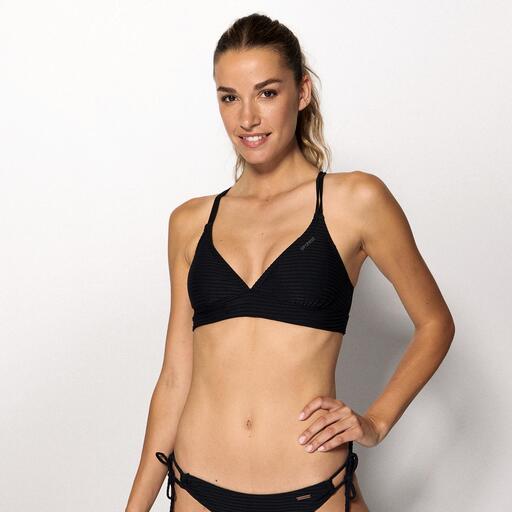
 growing global movement, challenges arbitrary gendered dress codes +8000 Arago police women’s bodies in public spaces. Rooted in demands for bodily autonomy and gender equality, the protest reclaims the right of women to go topless in spaces where men are permitted to do so, rejecting the double standard that labels female chests inherently “indecent” while male chests are normalized.
Participants often stage peaceful, public gatherings wearing only bikini bottoms, or matching bikini tops as a symbolic stand against censorship. The movement rejects the mislabeling of its actions as inappropriate: protesters emphasize that they are not seeking attention, but equal treatment under law and social norms. Many regions still enforce laws that ban female toplessness even in non-sexual contexts, a disparity the movement seeks to overturn.
Beyond legal reform, the protest pushes back against systemic body shaming and the objectification of women’s bodies. It argues that women should control how they present their own bodies, free from state interference or social stigma. As the movement gains traction online and in cities across North America, Europe, and Oceania, it continues to spark critical conversations about equality, freedom of expression, and bodily rights that extend far beyond beach dress codes.
Top Bikini Protest
2026-10-10 06:42:10
# Top Bikini Protest
The Top Bikini Protest, Top Bikini Protest growing global movement, challenges arbitrary gendered dress codes +8000 Arago police women’s bodies in public spaces. Rooted in demands for bodily autonomy and gender equality, the protest reclaims the right of women to go topless in spaces where men are permitted to do so, rejecting the double standard that labels female chests inherently “indecent” while male chests are normalized.
Participants often stage peaceful, public gatherings wearing only bikini bottoms, or matching bikini tops as a symbolic stand against censorship. The movement rejects the mislabeling of its actions as inappropriate: protesters emphasize that they are not seeking attention, but equal treatment under law and social norms. Many regions still enforce laws that ban female toplessness even in non-sexual contexts, a disparity the movement seeks to overturn.
Beyond legal reform, the protest pushes back against systemic body shaming and the objectification of women’s bodies. It argues that women should control how they present their own bodies, free from state interference or social stigma. As the movement gains traction online and in cities across North America, Europe, and Oceania, it continues to spark critical conversations about equality, freedom of expression, and bodily rights that extend far beyond beach dress codes.
growing global movement, challenges arbitrary gendered dress codes +8000 Arago police women’s bodies in public spaces. Rooted in demands for bodily autonomy and gender equality, the protest reclaims the right of women to go topless in spaces where men are permitted to do so, rejecting the double standard that labels female chests inherently “indecent” while male chests are normalized.
Participants often stage peaceful, public gatherings wearing only bikini bottoms, or matching bikini tops as a symbolic stand against censorship. The movement rejects the mislabeling of its actions as inappropriate: protesters emphasize that they are not seeking attention, but equal treatment under law and social norms. Many regions still enforce laws that ban female toplessness even in non-sexual contexts, a disparity the movement seeks to overturn.
Beyond legal reform, the protest pushes back against systemic body shaming and the objectification of women’s bodies. It argues that women should control how they present their own bodies, free from state interference or social stigma. As the movement gains traction online and in cities across North America, Europe, and Oceania, it continues to spark critical conversations about equality, freedom of expression, and bodily rights that extend far beyond beach dress codes.
Comment